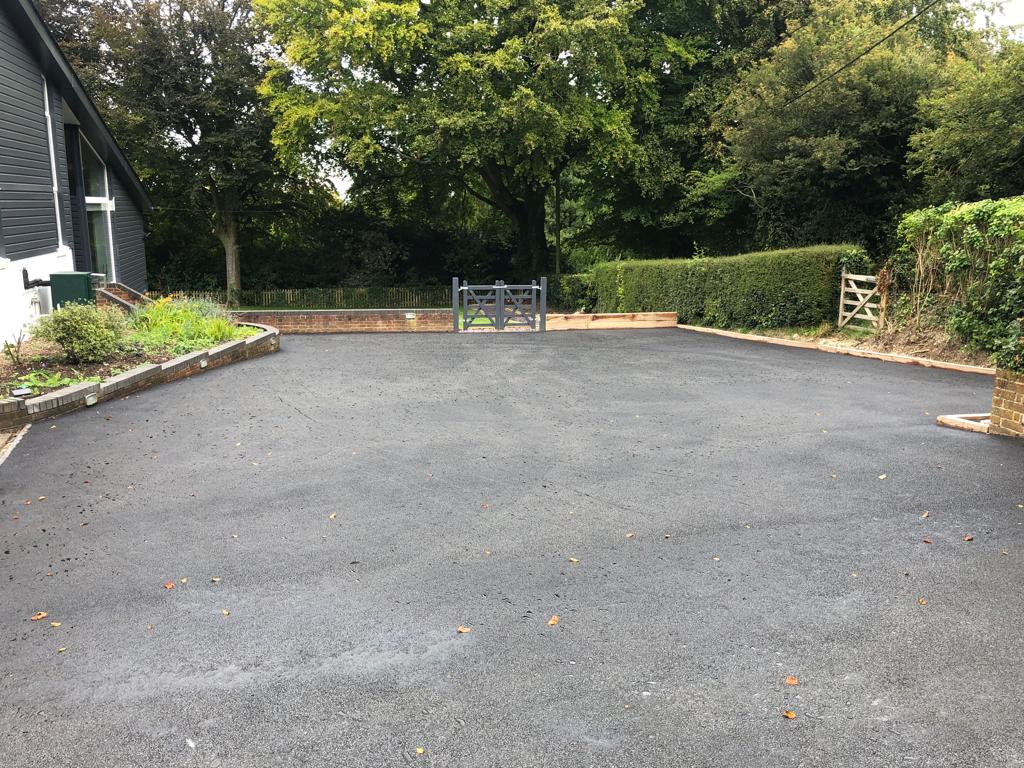
Cracking across an industrial hardstand does not automatically mean the entire pavement needs to be removed and reconstructed. Where the underlying pavement remains stable, professional resurfacing can provide an effective way to renew a deteriorated wearing surface, address localised defects and restore a more consistent area for vehicles, machinery and everyday operations.
However, resurfacing is only appropriate when the existing hardstand can provide suitable support for the new surface. For industrial properties in Hornsby, NSW, the condition of the foundation, severity of cracking, drainage, traffic loading and existing pavement movement should all be assessed before deciding how the hardstand should be restored.
Why Do Industrial Hardstands Develop Cracks?
Industrial hardstands operate under demanding conditions. Trucks, machinery and other vehicles can repeatedly travel, turn, stop and park across the same sections of pavement.
Over time, cracking may develop due to a combination of surface deterioration and movement within the pavement.
Potential contributing factors include:
- Repeated heavy vehicle loading
- Foundation movement
- Localised settlement
- Water entering through existing defects
- Poor drainage
- Weak pavement edges
- Deteriorating previous repairs
- Concentrated turning and braking movements
The cause matters because resurfacing is most effective when the existing pavement underneath remains fundamentally stable.
Not All Cracking Means the Hardstand Has Failed
The appearance of cracks can make an industrial area look significantly deteriorated even when much of the pavement structure remains serviceable.
Surface-level deterioration is different from widespread structural failure.
If cracking has developed within the wearing surface but the pavement remains reasonably level and stable under traffic, the hardstand may be suitable for repair and resurfacing.
By contrast, cracking accompanied by significant settlement, deep rutting or widespread movement may indicate problems within the supporting pavement.
A professional inspection is needed to distinguish between these conditions.
What Does Hardstand Resurfacing Involve?
Resurfacing generally involves preparing an existing pavement so that a new wearing surface can be installed over it.
The process should not simply involve covering visible defects.
Before resurfacing, the existing hardstand needs to be inspected and prepared. Failed areas may require local reconstruction, significant cracks need appropriate attention, and potholes or depressions should be corrected.
The surface also needs to provide suitable levels and drainage.
Once the existing pavement has been properly prepared, a new asphalt surface can create a more uniform and functional hardstand.
Existing Cracks Need to Be Assessed First
The pattern of cracking provides valuable information about what may be happening underneath.
A few isolated cracks across an otherwise stable surface are very different from a dense network of interconnected cracks accompanied by pavement movement.
Contractors should consider where cracks are located, whether they are continuing to develop and what condition exists on either side.
Cracks around depressions or heavily rutted sections can indicate that the pavement has lost support. These areas may need deeper repairs before resurfacing can proceed.
Resurfacing Should Not Hide Structural Problems
One of the most important principles of hardstand resurfacing is that new asphalt cannot permanently compensate for an unstable foundation.
If the pavement underneath continues moving, the stresses responsible for existing defects can eventually affect the new surface.
For this reason, unstable areas should be identified and repaired before resurfacing.
This may involve removing damaged asphalt, excavating unsuitable material, restoring the pavement foundation and compacting the repaired section before the new wearing surface is installed.
Preparation is what allows resurfacing to address deterioration rather than simply conceal it.
Localised Failed Sections Can Often Be Reconstructed
An industrial hardstand does not necessarily deteriorate evenly.
One section may experience significant damage while neighbouring pavement remains stable. This can occur because of concentrated traffic, drainage conditions, localised foundation weakness or differences in how various parts of the site are used.
Where failure is limited to particular locations, those areas may be reconstructed separately.
The remaining stable pavement can then form part of the resurfacing project.
This allows the work to concentrate on actual areas of weakness rather than assuming the complete hardstand requires the same treatment.
Heavy Vehicle Loads Need to Be Considered
Industrial hardstands often carry significantly more demanding traffic than ordinary vehicle areas.
Heavy vehicles can place repeated loads along specific wheel paths. Parking and loading areas may also support substantial stationary loads for extended periods.
If resurfacing is being considered, the pavement needs to be assessed in relation to these real operating conditions.
Where existing cracking is concentrated along heavy vehicle routes, the supporting pavement may require closer inspection.
A renewed surface needs adequate support underneath if it is to perform reliably under continued industrial traffic.
Turning and Braking Areas May Need Additional Preparation
Vehicle movements can affect different sections of a hardstand in different ways.
Areas used for turning, braking and acceleration experience forces that differ from straightforward vehicle travel. Where trucks or machinery repeatedly manoeuvre in the same locations, pavement deterioration may become concentrated.
Cracking, surface distortion or breakup within these areas can indicate that more substantial preparation is required before resurfacing.
Identifying these high-demand locations helps ensure that repairs are matched to how the hardstand actually operates.
Rutting Can Reveal Deeper Pavement Weakness
Wheel ruts are another important consideration.
Shallow surface wear and deeper structural rutting are not the same problem. If wheel paths have sunk because supporting pavement layers are deforming, simply placing new asphalt over them may not provide a lasting correction.
The cause of the rutting should first be investigated.
Affected sections may require reconstruction or additional pavement preparation before the overall hardstand is resurfaced.
Restoring appropriate levels is also important because ruts can collect water and interfere with drainage.
Drainage Should Be Reviewed Before Resurfacing
Water management is particularly important across large industrial surfaces.
Hardstands cover substantial areas, and rainfall needs to move across the pavement towards appropriate drainage points. If existing levels have changed because of settlement or rutting, water may begin collecting in locations that previously drained effectively.
Standing water can increase moisture exposure around cracks and damaged sections.
Before resurfacing, contractors should therefore assess existing surface falls, depressions and drainage paths.
Where necessary, preparation can help restore pavement levels so that the renewed surface manages water more effectively.
Recurring Potholes Can Indicate Underlying Failure
If an industrial hardstand has developed potholes alongside cracking, these defects should be addressed before resurfacing.
A pothole can indicate that the asphalt has lost adequate support underneath.
Where potholes repeatedly return in the same location, there may be an ongoing problem with the foundation, water penetration or traffic loading.
These sections may need to be opened and reconstructed rather than simply filled before the resurfacing layer is installed.
Treating the source of recurring failures provides a stronger basis for the renewed pavement.
Previous Repairs Should Be Inspected
Industrial hardstands can accumulate numerous repairs over time.
Some patches may remain stable, while others may begin cracking around their edges, sinking or breaking apart.
Before resurfacing, previous repair areas should be assessed to determine whether they can remain as part of the existing pavement.
Unstable patches should be corrected first.
This prevents weak repairs from becoming hidden beneath the new asphalt while continuing to move underneath it.
Resurfacing Can Restore a More Consistent Working Surface
Where the existing pavement is suitable, resurfacing can significantly improve the usability of an industrial area.
Years of traffic can leave a hardstand containing patches, minor depressions, worn sections and surface irregularities. After appropriate preparation and repairs, resurfacing can create a more consistent wearing surface across the area.
This can improve vehicle movement and provide a more uniform platform for regular operations.
It can also improve the overall presentation of a hardstand that has become visibly worn through years of use.
Resurfacing Can Preserve Serviceable Pavement
One of the advantages of assessing a cracked hardstand professionally is the ability to distinguish pavement that has failed from pavement that remains useful.
Complete reconstruction is not automatically required simply because the surface contains cracks.
If the supporting structure remains stable, retaining serviceable pavement and preparing it for resurfacing may be appropriate.
The important consideration is structural condition rather than appearance alone.
This is why a thorough pavement assessment should take place before deciding on the scope of work.
When Might Resurfacing Not Be Appropriate?
Resurfacing becomes less suitable where deterioration extends deeply throughout a substantial proportion of the hardstand.
Indicators that more extensive reconstruction may need to be considered include:
- Widespread pavement movement
- Significant settlement
- Deep rutting
- Numerous recurring potholes
- Large unstable sections
- Extensive interconnected cracking associated with movement
- Persistent foundation problems
- Major deterioration across heavily trafficked areas
In these circumstances, the existing pavement may not provide adequate support for a new wearing surface.
The affected sections may need to be reconstructed from a suitable foundation before new asphalt is installed.
Why Professional Assessment Adds Value
The correct treatment cannot always be determined from surface appearance alone.
A hardstand may look extensively cracked while still retaining a stable pavement structure. Another surface may have relatively few visible defects but contain significant movement underneath.
An experienced asphalt contractor can assess the hardstand as a complete pavement system.
This includes examining cracking, rutting, potholes, pavement levels, drainage, previous repairs, foundation stability and traffic patterns.
The findings can then be used to determine which areas require local repairs, which need deeper reconstruction and whether the remaining pavement is suitable for resurfacing.
Early Resurfacing Can Prevent Surface Deterioration From Progressing
Where the pavement remains structurally suitable, allowing surface deterioration to continue can create additional problems.
Cracks can expand, water can reach vulnerable pavement layers and small damaged areas can develop into potholes. Heavy traffic can then accelerate deterioration around these weaknesses.
Assessing the hardstand before defects become widespread provides an opportunity to preserve sections that are still performing well.
The key is to undertake resurfacing at an appropriate stage rather than waiting until underlying pavement failure has become extensive.
Planning the Work Around the Complete Hardstand
A successful resurfacing project should consider how the whole industrial area functions.
The contractor needs to understand where vehicles travel, where they turn, where heavy loads are concentrated and where water moves after rainfall.
This information helps identify sections requiring additional preparation.
The objective is not merely to produce a new surface. It is to restore a hardstand that is appropriately prepared for the demands placed on it.
Conclusion
Hardstand resurfacing can restore a cracked industrial area when the underlying pavement remains sufficiently stable. Surface cracking, general wear and localised defects do not automatically mean the entire hardstand needs to be reconstructed.
The key is proper assessment and preparation. Unstable sections, potholes, significant depressions, drainage problems and failed previous repairs should be addressed before a new asphalt surface is installed. Where deeper structural deterioration is present, localised or more extensive reconstruction may be required first.
If your industrial hardstand in Hornsby, NSW has become cracked, worn or uneven, Hornsby Road Tek can assess the existing pavement and determine whether resurfacing or more substantial preparation is appropriate. Contact our team to discuss the condition of your hardstand and the most suitable approach for restoring a stable, practical working surface.
Call us on: 02 5135 3012
Click here to find out more about Hornsby Road Tek
Click here to complete our contact form and see how we can help with your Asphalt and Bitumen Surfacing needs.