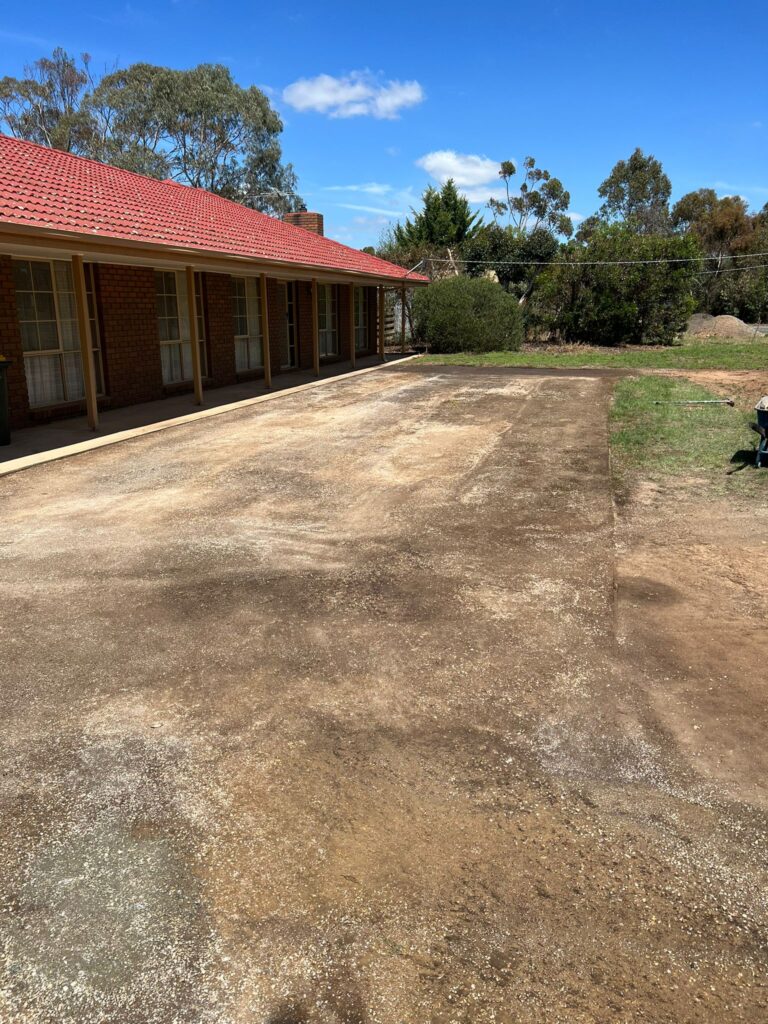
An unsealed road does not need to be perfectly smooth at all times to remain functional, but gradual changes in its shape can eventually make driving less comfortable, interfere with drainage and accelerate deterioration. Corrugations, wheel ruts and potholes are often the obvious signs, yet problems can begin well before a road becomes particularly difficult to use.
Professional grading reshapes the road surface, redistributes suitable material and restores the profile needed for effective vehicle access and water runoff. For property owners in Hornsby, NSW, recognising when an unsealed road needs grading can help address developing problems before they affect larger sections of the road.
What Does Professional Road Grading Actually Do?
Grading is more involved than simply smoothing over bumps.
An experienced operator reshapes the road to restore an appropriate profile, correct irregular sections and improve the way water moves away from the travelled surface. Existing pavement material can be redistributed where appropriate, helping create a more consistent driving area before compaction.
Depending on the condition of the road, grading may address:
- Corrugations
- Wheel ruts
- Minor depressions
- Uneven surface levels
- Loose material
- Poor surface drainage
- Early pothole development
However, grading cannot correct every form of road failure. If the supporting pavement has become seriously unstable or material has been extensively lost, additional preparation may be required.
Corrugations Are Becoming More Noticeable
Corrugations are the repetitive ridges and depressions that can develop across an unsealed road.
They commonly become noticeable in areas experiencing regular acceleration, braking or vehicle movement. Once established, they can make the road uncomfortable to drive over and place additional stress on vehicles.
Minor corrugations may progressively worsen as traffic continues disturbing the surface material.
Professional grading can reshape affected sections and restore a more consistent profile rather than allowing these irregularities to become increasingly pronounced.
Deep Wheel Ruts Are Developing
Wheel ruts are another clear indication that an unsealed road may need attention.
As vehicles repeatedly follow the same path, loose or inadequately supported material can be displaced or compressed. Two defined channels may gradually form along the most frequently travelled wheel paths.
Ruts are problematic for more than driving comfort. They can also begin directing water along the road rather than allowing it to move towards the edges.
Once water starts following wheel tracks, erosion and surface deterioration can accelerate.
Grading can help restore the correct profile and prevent vehicle paths from becoming unintended drainage channels.
Water Is Pooling After Rain
Standing water is one of the most important warning signs to watch for.
An appropriately shaped unsealed road should encourage water to leave the travelled surface. When depressions form or the original profile deteriorates, puddles can remain after rainfall.
Water can soften the pavement and make affected areas more vulnerable to vehicle damage. As tyres repeatedly travel through wet sections, material may be displaced and depressions can deepen.
If puddles consistently form in the same locations, the problem may involve road shape rather than rainfall alone.
Professional grading can restore appropriate falls where the pavement condition allows.
Potholes Are Beginning to Form
Potholes often develop where water, traffic and surface irregularities combine.
A small depression can collect moisture. Passing vehicles then disturb the weakened material, gradually enlarging the damaged area.
Individual potholes may sometimes require localised attention, but numerous potholes across an unsealed road can indicate that the overall surface profile has deteriorated.
Grading can help reshape suitable sections, although deeper failures should be assessed to determine whether additional material or base repairs are required.
Simply pushing loose material into a substantial pothole without addressing the reason it formed may result in the defect returning.
Loose Material Is Building Up Along the Road
Regular traffic can gradually move aggregate away from wheel paths and towards the centre or edges of an unsealed road.
Over time, this can leave some sections lacking suitable surface material while loose ridges accumulate elsewhere.
This uneven distribution affects both driving conditions and drainage.
Professional grading can redistribute usable pavement material and reshape the travelled surface. Where substantial material has already been lost, additional pavement material may be necessary rather than relying on grading alone.
The Road Has Lost Its Crown or Crossfall
Many unsealed roads are deliberately constructed with a slightly raised centre or another appropriate crossfall to encourage water to move towards the sides.
As traffic and weather gradually reshape the road, this profile can flatten or even reverse.
Once the centre becomes lower than surrounding sections, water may begin travelling along the road rather than leaving it.
This can contribute to:
- Persistent puddles
- Wheel rut erosion
- Pothole development
- Soft pavement sections
- Increasing surface irregularity
Restoring the road profile is one of the most valuable functions of professional grading.
The Edges Are Deteriorating
The centre of an unsealed road is not the only area worth monitoring.
Edges can deteriorate when water is not adequately controlled, vehicles repeatedly travel close to the boundary or surface material migrates away from the main pavement.
Damaged edges can gradually narrow the usable road width and affect drainage.
Grading may form part of the solution where the deterioration remains manageable, but severely eroded or unsupported edges may require additional work before the road can be properly reshaped.
Vehicles Are Beginning to Avoid Certain Sections
Driver behaviour can provide an early indication of pavement problems.
When people begin steering around potholes, deep ruts, wet sections or severe corrugations, the normal traffic path changes. This can create new wheel tracks and place additional stress on sections of road that were not intended to carry concentrated traffic.
The result can be progressively wider deterioration.
If drivers regularly need to weave around defects, professional grading should be considered before the road becomes more difficult to restore.
Rainwater Is Running Along the Road
Water should generally be encouraged to move away from the travelled surface rather than using the road itself as a drainage channel.
Visible channels, washed-out wheel tracks or sediment movement after rain can indicate that the road profile is no longer controlling runoff effectively.
This type of erosion can remove fine material and gradually weaken the surface.
Professional grading can help re-establish appropriate levels, although surrounding drainage conditions should also be considered. Reshaping the road without providing an effective route for water to leave the pavement may not resolve the underlying issue.
The Road Needs Attention More Frequently
Increasing maintenance frequency can indicate that the road’s overall condition needs reassessment.
If potholes repeatedly return, corrugations quickly redevelop or previously corrected sections deteriorate after relatively little traffic, there may be issues beyond the immediate surface.
Possible factors include unsuitable material, inadequate compaction, poor drainage or weaknesses in the supporting pavement.
At this point, simply grading the road in the same way repeatedly may provide limited improvement. A professional assessment can determine whether additional preparation is required.
When Is Grading Alone Not Enough?
Professional grading is highly effective for restoring the shape of a serviceable unsealed road, but it cannot replace missing pavement material or permanently stabilise a failed foundation.
Additional work may be necessary where there are:
- Deep soft spots
- Extensive erosion
- Major washouts
- Significant loss of pavement material
- Unstable underlying ground
- Persistent drainage failures
- Severe deformation
These problems should be identified before grading so the road can receive the preparation appropriate to its condition.
Preparation Matters if the Road Will Eventually Be Sealed
If an unsealed road is being prepared for future asphalt or bitumen surfacing, grading becomes particularly important.
The road needs appropriate levels, drainage and a stable foundation before a sealed wearing surface is installed. Asphalt or Spray & Seal should not be expected to compensate for an inadequately prepared pavement underneath.
Professional grading can therefore serve both as maintenance for an existing unsealed road and as an important preparation stage for a future surfacing project.
Why Regular Inspection Is Valuable
The best time to assess an unsealed road is often before it becomes severely deteriorated.
Regularly checking the surface after periods of rainfall and frequent traffic can reveal early changes in drainage, wheel paths and road shape.
Pay particular attention to recurring low points, areas where aggregate is moving, developing corrugations and sections where water remains after surrounding ground has drained.
Addressing these conditions while deterioration is still manageable can help preserve the overall road formation.
Why Professional Grading Makes a Difference
Effective grading requires an understanding of how road shape, pavement material, drainage and traffic interact.
Simply making the surface appear smooth does not necessarily restore the correct profile. An experienced operator considers where water needs to travel, which sections require reshaping and whether the existing material is suitable for redistribution and compaction.
For unsealed roads in Hornsby, professional grading provides an opportunity to address the causes of unevenness rather than repeatedly smoothing individual defects without considering the wider pavement.
Conclusion
An unsealed road may need professional grading when corrugations, wheel ruts, potholes, loose material and uneven sections become increasingly noticeable. Standing water, erosion and the loss of the road’s original crown or crossfall are particularly important warning signs because they indicate that drainage performance is deteriorating.
Grading at the appropriate stage can restore road shape, improve vehicle access and help water leave the travelled surface more effectively. Where deeper foundation, drainage or material problems are present, these should be addressed alongside the grading work.
If an unsealed road in Hornsby, NSW is becoming rough, rutted or difficult to maintain, Hornsby Road Tek can assess its condition and determine the grading and preparation required. Contact our team to discuss a practical approach to restoring a more stable, functional and properly shaped road surface.
Call us on: 02 5135 3012
Click here to find out more about Hornsby Road Tek
Click here to complete our contact form and see how we can help with your Asphalt and Bitumen Surfacing needs.